
If you’re planning a commercial or residential outdoor project, this is probably your first question.
The honest answer: it depends. Not because we’re dodging—but because an aluminum louvered pergola isn’t a single product. It’s a customizable system, and the final cost reflects the choices you make.
Here’s what actually drives the price.
What Is an Aluminum Louvered Pergola?
A structural outdoor shade system with adjustable horizontal slats (louvers) on top. The frame is 6063-grade aluminum, powder-coated for weather resistance.
Unlike fixed-roof pergolas, the louvers open, close, or tilt—giving you control over sunlight, airflow, and rain protection.
Common configurations:
Manual or motorized louver operation
Freestanding or wall-mounted
Single-bay or multi-bay coupled systems
What Affects the Cost?
Size
The biggest cost driver. A 3×3m pergola uses very different materials than a 6×4m system. Larger spans require stronger profiles, heavier-duty motors, and reinforced connections.
Manual vs. Motorized
Manual: Lower upfront cost. Crank or wand operation.
Motorized: Higher upfront cost. Remote, wall switch, or app control. For systems over 4m wide, motorized is almost always worth it.
Aluminum Profile & Thickness
Not all aluminum is equal. Thicker walls, higher-grade alloy, and better powder coating increase cost but extend lifespan.
Ask about:
Alloy grade (6063-T5 or T6)
Wall thickness
Powder coating brand
Louver System
Standard single-layer louvers vs. insulated double-layer vs. fully retractable. Each affects performance and price.
Roof Configuration
Standard flat roof vs. integrated gutter system with hidden drainage. Multi-bay coupled systems with shared posts.
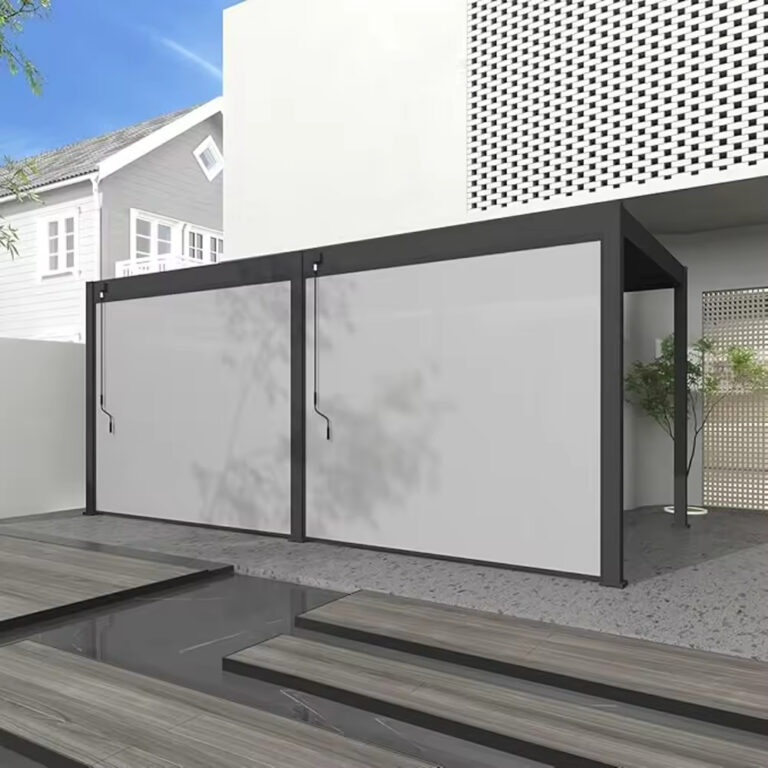
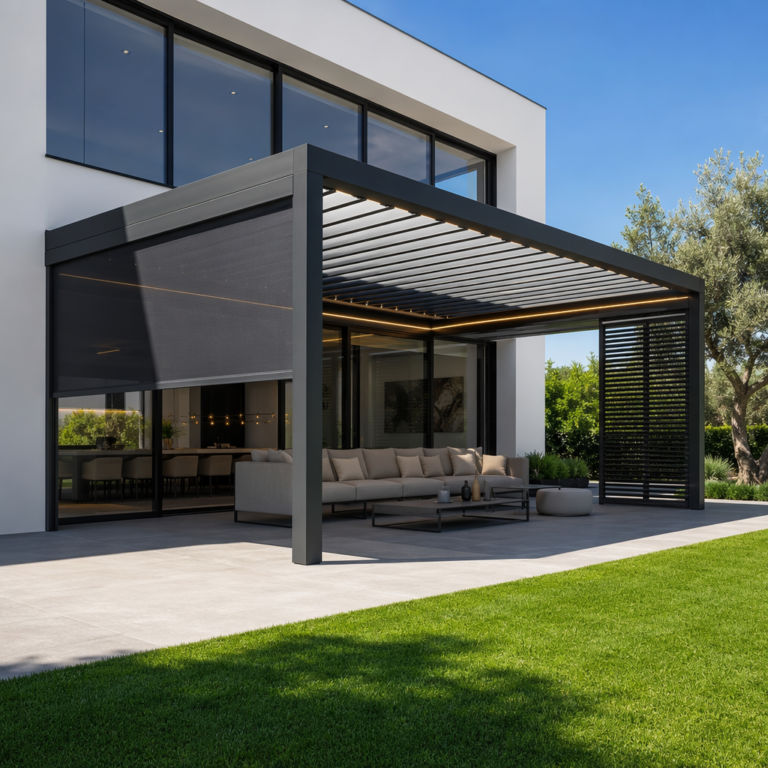
Side Screens / Zip Track Blinds
Adding motorized ZIP track blinds increases cost but dramatically extends usability—especially for coastal or windy locations.
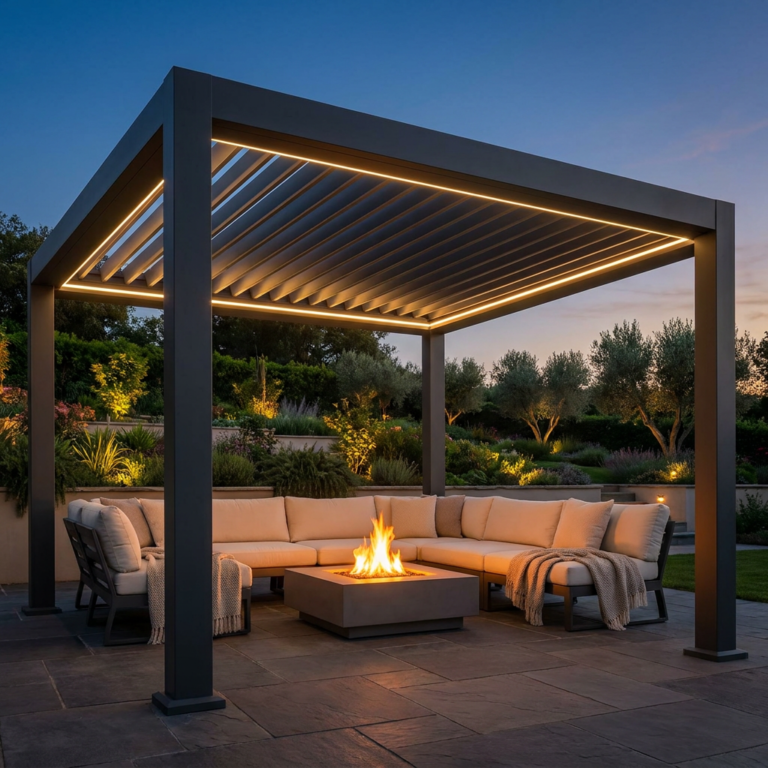
Lighting
Integrated LED lighting adds cost but eliminates aftermarket fixtures and extends evening usability.
Customization
Custom RAL colors, non-standard dimensions, special mounting requirements.
Shipping & Installation
Depends on destination, volume, and local labor rates.
Motorized vs. Manual: Quick Comparison
| Feature | Manual | Motorized |
|---|---|---|
| Operation | Crank or wand | Remote, app, wall switch |
| Upfront cost | Lower | Higher |
| Ideal for | Smaller systems | Larger systems, commercial use |
| Sensor integration | No | Wind, rain, light sensors optional |
Does Adding Zip Track Blinds Increase the Cost?
Yes. But it also increases the value of your pergola.
ZIP track blinds add:
Wind protection
Privacy
Insect control
Rain deflection from the sides
Especially important for coastal installations, high-wind areas, and commercial dining spaces.
For specifications, see our [Zip Track Blinds product page].
How Much Does a Custom Aluminum Pergola Cost?
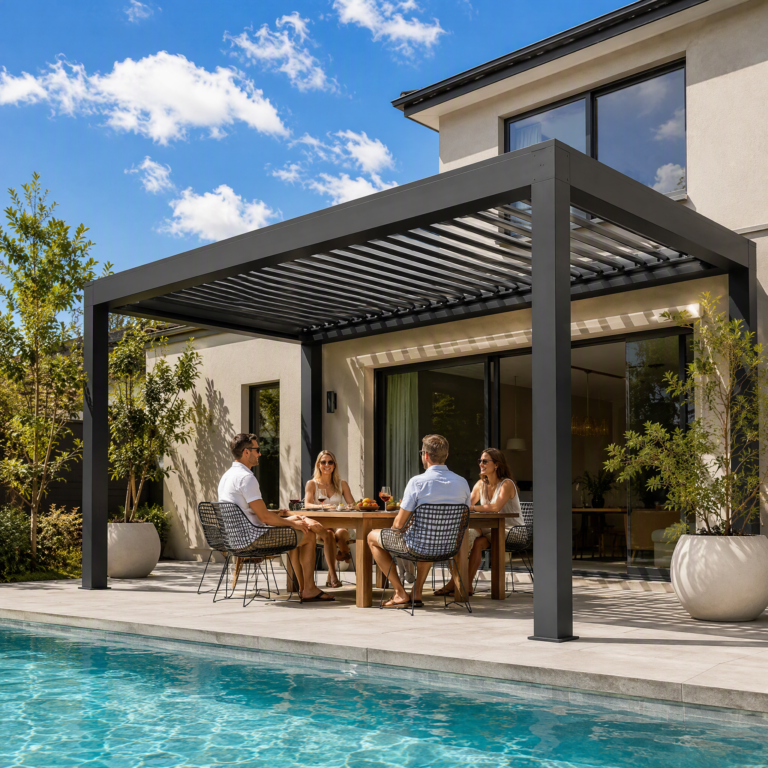
Custom sizing, colors, and configurations affect the final price. Because every project is different, pricing is based on your specific requirements.
What “custom” includes:
Non-standard dimensions
RAL color matching
Motorized louver systems
Integrated ZIP screens
LED lighting packages
For product details, see our [Aluminum Pergola product page].
FAQ
How long does an aluminum louvered pergola last?
20-30 years with minimal maintenance.
Are motorized pergolas worth it?
For most commercial applications and larger residential systems, yes.
Can I add Zip Track Blinds to a pergola?
Yes. Many of our systems integrate ZIP screens directly into the frame.
How do I get a quote?
Send your project details—dimensions, location, configuration—to our team.
The Bottom Line
An aluminum louvered pergola is an investment. The cost depends on size, motorization, materials, customization, and shipping.
Don’t shop on price alone. Ask about alloy grade, motor brand, powder coating quality, and drainage design.
A cheaper system that fails in three years costs more than a quality system that lasts twenty.
If you are sourcing aluminum louvered pergolas for a residential, commercial, or wholesale project, ANYHOO can provide customized solutions.